According to Deepseek:
Stellar Protocol 17 is a significant upgrade to the Stellar network, activated in November 2023. It introduces enhancements aimed at improving transaction flexibility and expanding asset functionality. Here's a detailed breakdown:
### Key Features of Protocol 17:
1. **CAP-0042 (Transaction Preconditions):**
- **What it does:** Allows transactions to specify advanced conditions for validity, such as:
- **Time Bounds:** Set a specific time window for transaction execution.
- **Ledger Sequence Numbers:** Require the transaction to be processed only after a certain ledger number.
- **Sequence Number Conditions:** Enforce constraints based on the account's sequence number (e.g., minimum sequence age or ledger gap).
- **Impact:** Enhances complex transaction workflows, such as escrow arrangements or time-locked payments, and improves compatibility with state channels and off-chain protocols.
2. **CAP-0047 (Expanded Asset Functionality):**
- **What it does:** Introduces new operations and configurations for assets, enabling more sophisticated asset management. This could include:
- Customizable asset behaviors (e.g., dynamic metadata or rules).
- Improved interoperability with decentralized applications (dApps) and smart contracts.
- **Impact:** Empowers asset issuers with greater control and flexibility, facilitating innovative use cases like conditional asset transfers or programmable compliance features.
### Why It Matters:
- **Developer Flexibility:** Protocol 17 provides tools for developers to create more complex and secure financial applications on Stellar.
- **Enhanced User Experience:** Features like transaction preconditions reduce the risk of failed or mistimed transactions, improving reliability for end-users.
- **Foundation for Future Upgrades:** These changes lay groundwork for further enhancements, such as deeper integration with Soroban (Stellar's smart contract platform).
### Context:
- Protocol upgrades on Stellar are decided via validator voting, ensuring decentralized governance.
- Protocol 17 precedes later upgrades like Protocol 18 (which introduced Automated Market Makers) and Protocol 20 (Soroban mainnet integration), highlighting its role in evolving Stellar's ecosystem.
In summary, **Stellar Protocol 17** strengthens the network's infrastructure by refining transaction logic and asset capabilities, aligning with Stellar's mission to enable efficient, cross-border financial solutions.
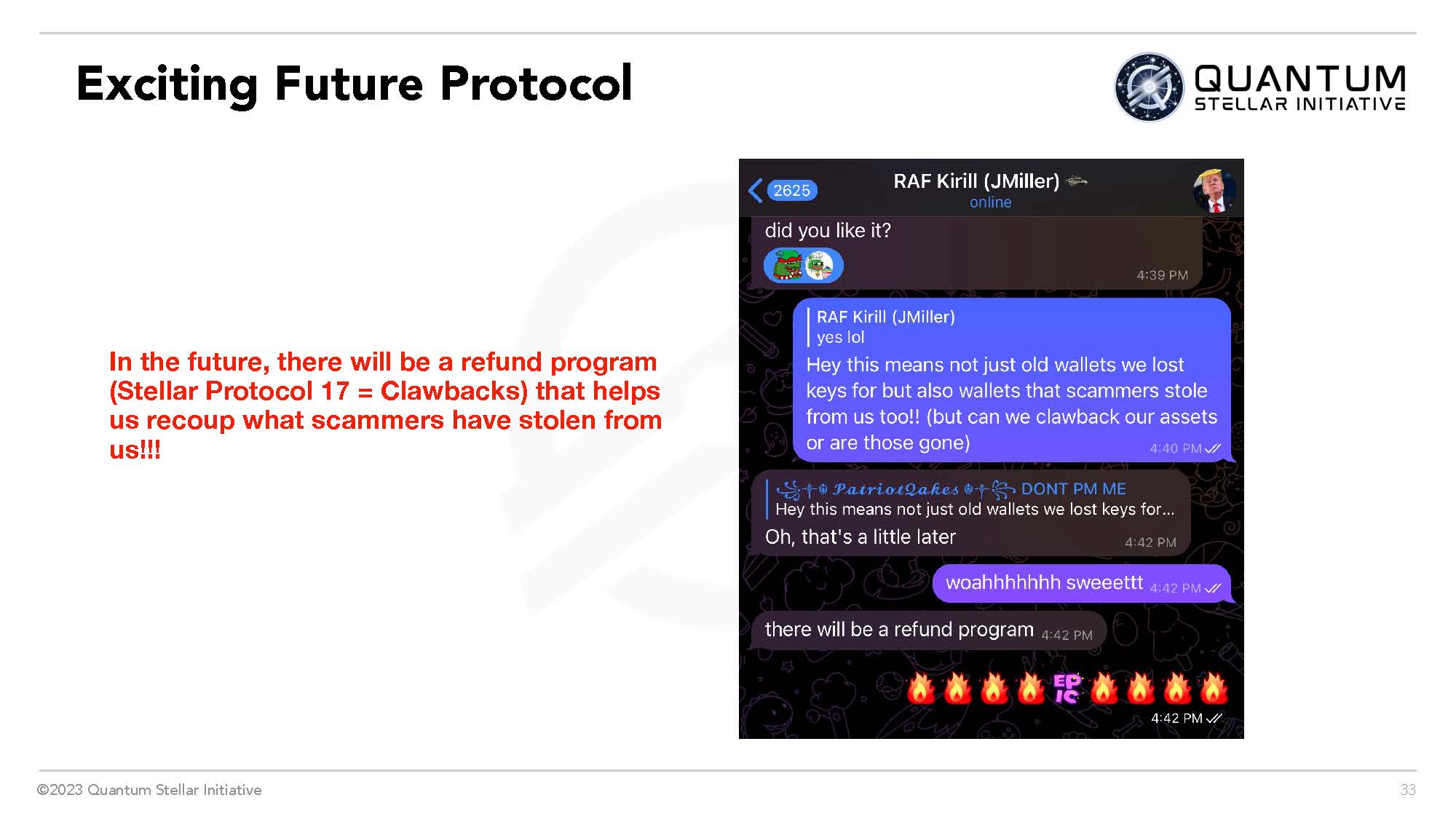
According to Deepseek:
Stellar Protocol 17 is indirectly related to clawbacks, but it does not introduce clawback functionality itself. Instead, it enhances tools that can work alongside existing clawback features. Here’s how they connect:
Clawbacks on Stellar
Clawbacks were introduced in Protocol 14 (2021) as part of CAP-0035. They allow asset issuers to reclaim (claw back) tokens from holders under predefined conditions (e.g., regulatory compliance, fraud, or contractual agreements). This is a critical feature for regulated financial instruments or stablecoins.
How Protocol 17 Complements Clawbacks
Protocol 17 introduced CAP-0042 (Transaction Preconditions), which enables more granular control over transaction execution. While not directly tied to clawbacks, these preconditions can enhance workflows involving clawbacks. For example:
-
Time-Bound Clawbacks:
-
Set a clawback transaction to execute only after a specific time (e.g., after a vesting period expires).
-
-
Sequence-Based Triggers:
-
Link clawbacks to ledger sequence numbers or account states, ensuring they activate only under certain conditions.
-
-
Conditional Compliance:
-
Combine clawbacks with preconditions to automate compliance (e.g., clawback assets if a user fails KYC verification by a deadline).
-
Key Takeaway
-
Clawbacks themselves are governed by Protocol 14.
-
Protocol 17 provides tools (like transaction preconditions) to make clawback mechanisms more flexible and programmable.
This combination strengthens Stellar’s ability to support compliant, enterprise-grade asset issuance and management. For clawback-specific details, refer to Protocol 14.